
Many small business owners recognise the importance of digital marketing, but most struggle with one question: “How much should I actually spend on it?” Some businesses spend too little and never see results. Others spend heavily on ads without a proper strategy and end up wasting money.
In India, especially for local businesses and startups, digital marketing in 2026 is no longer optional. Customers search on Google before visiting a store, check Instagram pages before trusting a brand, and compare businesses online within minutes. That’s why having the right marketing budget matters more than ever.
Why Your Marketing Budget Matters More Than You Think
A lot of small businesses don’t struggle because their product is bad. They struggle because hardly anyone knows they exist. You could have the best café in town, a great clothing store, or even an amazing service but if people can’t find you online, they’ll probably end up choosing a competitor they saw first on Instagram or Google.
That’s exactly why a digital marketing budget matters. It’s not just about “running ads.” It’s about making sure your business stays visible where customers are already spending their time. Today, most people discover brands through Google searches, Instagram reels, YouTube videos, online reviews, or even a random Facebook ad they saw while scrolling at night.
In India especially, this shift is happening fast. Even small local businesses in cities like Mangalore are getting customers through Instagram pages and WhatsApp inquiries. A bakery with good reels can attract more attention than a shop spending lakhs on a physical banner. That’s how powerful digital visibility has become.
And here’s something many business owners realise too late, marketing without a budget usually turns into random posting with no real strategy. One week there are ads, the next week nothing. A proper budget helps businesses stay consistent, and consistency is what builds trust online.
Another important thing is that digital marketing gives measurable results. Unlike traditional advertising where businesses often guess what worked, online marketing actually shows the numbers. You can track how many people visited your website, clicked on an ad, sent a message, or became a customer. Over time, this helps businesses understand what’s working and avoid wasting money on strategies that bring no results.
If someone is starting out, I’d honestly say don’t try to be everywhere at once. It’s better to focus on one or two platforms and do them properly. For most small businesses, Instagram and Google are usually the strongest starting points because that’s where customers actively search and engage.
The 5–15% Rule: How to Calculate Your Budget
There is no fixed number when it comes to digital marketing budgets, but many businesses follow something called the 5–15% rule as a general guideline. In simple terms, it means businesses usually spend a small percentage of their revenue on marketing depending on how fast they want to grow.
For businesses that are already stable and only want to maintain steady growth, spending around 5–7% of revenue is usually enough. Businesses trying to expand faster or attract more customers often invest around 7–12%. Startups or brands entering highly competitive industries sometimes spend even more because they need visibility quickly and have to compete with already established businesses.
For example, if a business earns around ₹5 lakh per month, they may spend somewhere between ₹35,000 and ₹60,000 on digital marketing. This could include social media ads, SEO, content creation, website maintenance, or influencer promotions.
Of course, these numbers are not strict rules. Every business is different. A local business that already gets regular referrals may not need a huge marketing budget initially. But industries like fashion, beauty, real estate, or food delivery usually require higher spending because competition is everywhere and customer attention is difficult to grab.
At the end of the day, the goal is not to spend the most money. It is to spend consistently and wisely on strategies that actually help the business grow.
Breakdown by Business Stage (Startup vs Established)
Different businesses require different marketing approaches.
Startups
Startups usually need to market more aggressively because nobody knows the brand yet. They are trying to build trust, attract customers quickly, and create awareness from scratch. Because of this, many startups spend around 10–15% of their revenue on marketing during their early stages.
Most of this budget goes toward social media advertising, branding, website development, content creation, and influencer collaborations. The focus is mainly on visibility and customer acquisition.
Many new business owners assume digital marketing becomes successful overnight. In reality, building trust online takes consistency. Businesses that continue marketing steadily usually perform better than businesses that run campaigns only occasionally.
Established Businesses
Established businesses already have some customer trust, search visibility, and word-of-mouth recognition. Their focus is often more on customer retention and scaling profitable channels rather than simply creating awareness.
These businesses usually spend around 5–10% of their revenue on activities such as SEO, remarketing ads, email marketing, and customer engagement campaigns.
Since they already understand their audience better, they can optimise campaigns more efficiently and avoid unnecessary spending.
How to Allocate Your Budget Across Channels
One of the biggest mistakes small businesses make is spending everything on one platform, usually paid advertisements. While ads can generate quick visibility, relying entirely on them is risky because traffic often stops once spending stops.
A balanced marketing budget generally includes SEO, paid advertising, social media marketing, website maintenance, and email marketing together.
SEO is important because it improves long term Google visibility. Paid advertising helps generate faster leads and website traffic. Social media platforms such as Instagram, LinkedIn, and YouTube help businesses build engagement and brand personality. Email marketing supports repeat purchases and customer retention.
For businesses starting digital marketing for the first time, investing in SEO and content marketing is usually a smarter long term decision than spending the entire budget on ads alone. Paid campaigns bring quick results, but SEO continues generating traffic even after campaigns end. At the end of the day, a marketing budget isn’t really an expense anymore – it’s part of business survival. Because in today’s digital world, being invisible online often means being invisible to customers too.
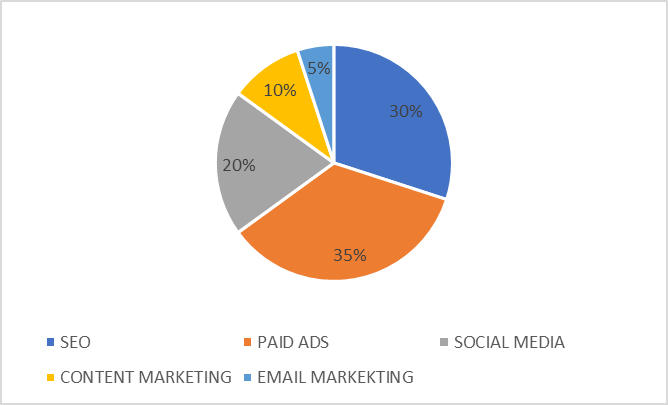
SEO vs Paid Ads vs Social Media — What to Prioritise
SEO works best for businesses that want long-term growth and sustainable visibility on Google. It usually takes a few months to show strong results, but once rankings improve, businesses can receive consistent traffic without paying for every click.
Paid advertising through Google Ads or Meta Ads is ideal for businesses that need immediate visibility. For example, coaching centres, salons, and local restaurants often use paid ads during seasonal offers or launches because results can appear quickly.
Social media, on the other hand, is extremely important for building trust and staying relevant. Platforms like Instagram and YouTube Shorts have become powerful marketing tools in 2026, especially for small businesses targeting younger audiences.
A smart strategy usually combines all three rather than depending on only one channel.
What Does Digital Marketing Cost in India? (Realistic Figures)
Digital marketing costs in India vary depending on business goals, competition, city, and the agency or freelancer involved.
For small businesses, SEO services may cost anywhere between ₹10,000–₹50,000 per month, while social media management can range from ₹8,000–₹40,000. Paid advertising budgets vary even more depending on the industry and campaign size.
A local business may begin with a monthly budget of ₹15,000–₹30,000, while growing businesses in competitive industries often spend ₹50,000 or more.
However, higher spending does not automatically guarantee success. Businesses that understand their audience and market strategically usually achieve better results than businesses that spend heavily without proper planning.
Signs You’re Underspending (And How It Hurts You)
One common mistake many small businesses make is expecting large results from extremely small marketing budgets. When businesses invest inconsistently, they often struggle with poor online visibility, low website traffic, weak branding, and irregular leads.
Over time, competitors who market consistently begin dominating search results and social media platforms, making it harder for smaller businesses to grow.
Underspending also creates a cycle. Lower visibility leads to fewer customers, which results in lower revenue and an even smaller future marketing budget. Businesses that market consistently usually grow faster because customers continue seeing and remembering their brand.
Final Thoughts
A digital marketing budget is no longer something businesses can ignore or treat as an extra expense. By 2026, most customers already expect businesses to be active online, whether it’s through Google, Instagram, YouTube or even WhatsApp. Businesses that stay visible online are usually the ones customers remember first.
For most small businesses in India, spending around 7–12% of revenue on digital marketing is a practical starting point. But the real difference doesn’t come from spending the most money – it comes from using that budget consistently and focusing on the right strategies. SEO, social media marketing, paid ads, and content creation all play different roles in helping a business grow online.
The businesses that succeed are usually the ones that stay consistent, understand their audience, and keep adapting to changing trends instead of treating marketing like a one-time activity.
At Market Bird, we work with businesses that want to grow their online presence in a practical and sustainable way. From SEO and social media marketing to branding and paid campaigns, the focus is always on helping businesses reach the right audience and build long-term visibility online.